
AI Workout Tracker Built for Progressive Overload
Stop guessing and start progressing
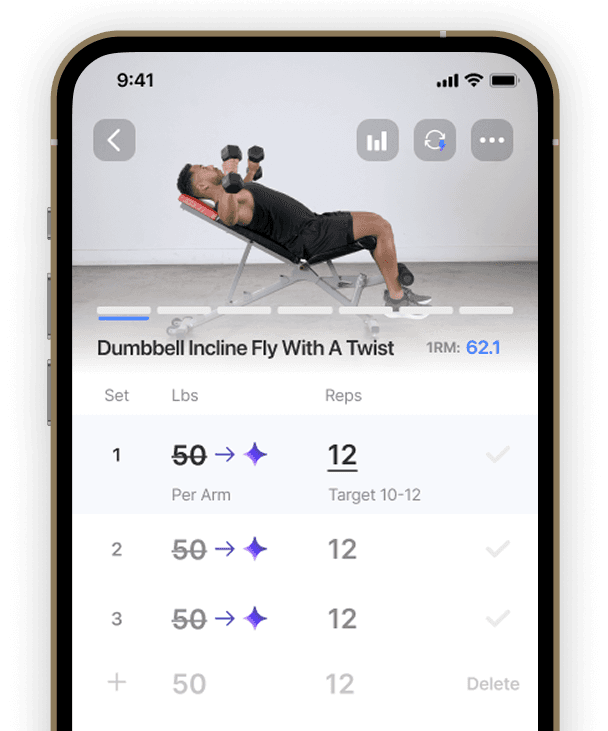
Why We Built the
Progressive Overload System
Progress is often unclear, even for disciplined lifters. Strength can stall without warning, and knowing when to push or hold back isn’t always intuitive. This system turns your training data into clear guidance — adjusting load automatically and showing where you’re improving. A simpler, more reliable way to progress.
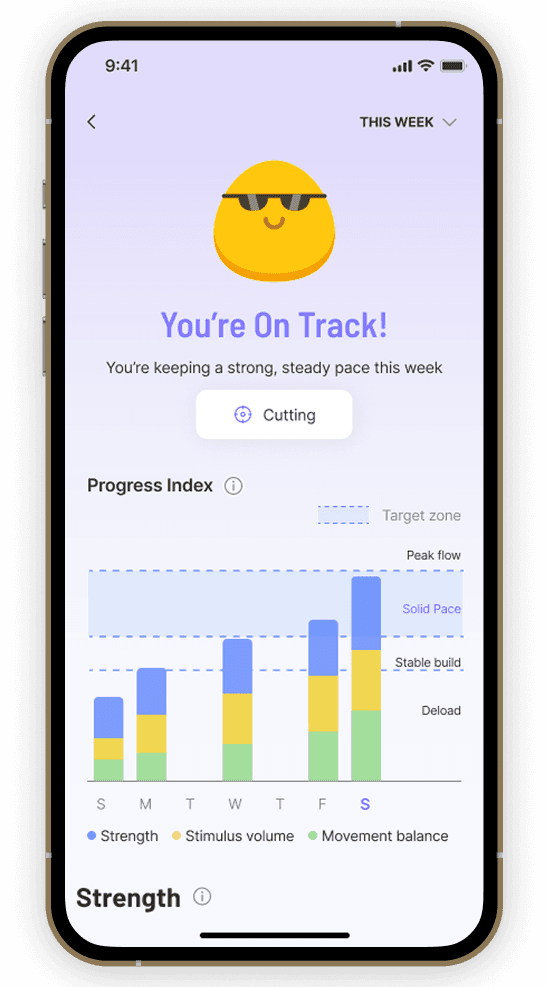
Progress index
Jefit adjusts your weights and sets based on your Progress Index, a weekly score that reflects how close you are to a solid, sustainable progression level. Your Progress Index is shaped by three core engines.
Strength
We track your strength across six key movement patterns. For each pattern, Jefit selects a representative exercise and measures your weekly 1RM change — giving you a clear read on real strength progress.
Stimulus volume
We calculate your effective sets based on RIR and intensity to reflect how much meaningful work your muscles actually receive. More effective stimulus = more productive training.
Movement balance
We measure how evenly you're training opposing movement patterns — like push vs. pull or hinge vs. squat. Better balance leads to faster, safer muscle development.
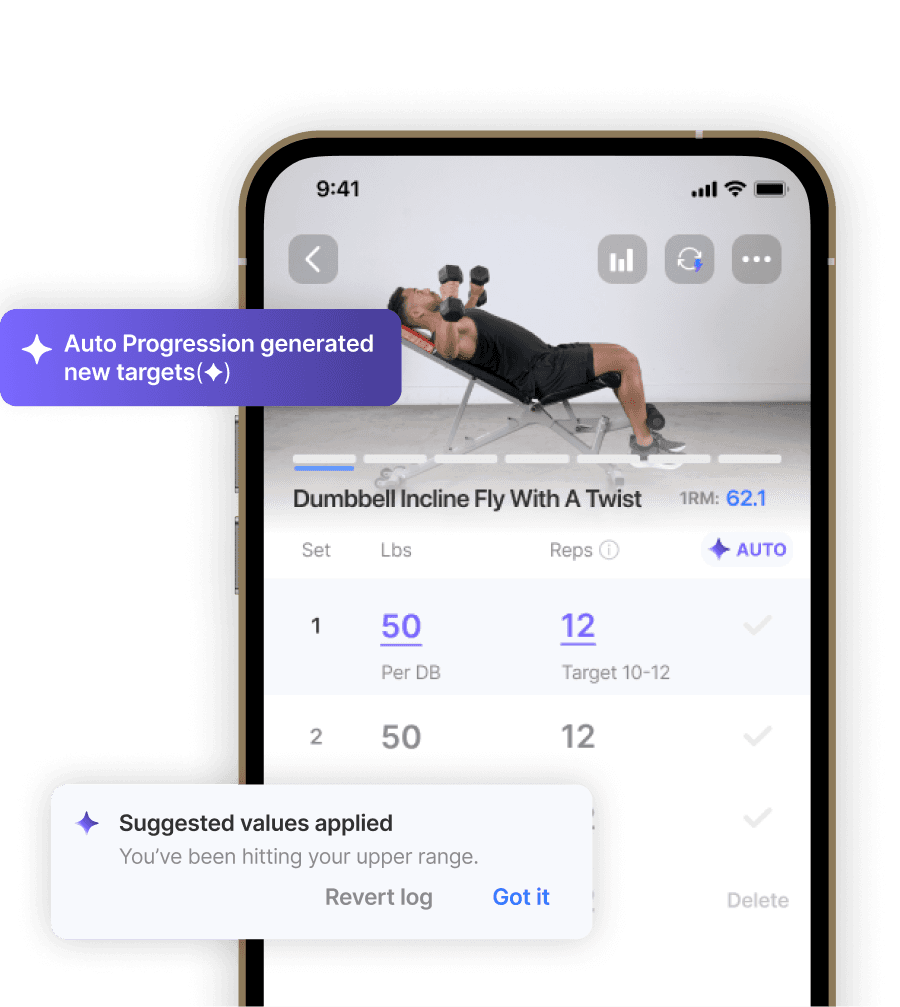
AI-Refined Strength Progression
Trained on 15 years of data from 13M+ lifters, Jefit analyzes your performance and adjusts your weight, reps, and training load — automatically, accurately, and personalized to your goal.
Jefit vs. Other Apps
| Feature | Others | |
|---|---|---|
| Accuracy | Data-trained engines | Guesswork |
| Personalization | Goal + level + performance | Template |
| Load Adjustments | Auto increase / hold / deload | Manual |
| Effective Sets | Yes | No |
| Balance Tracking | Yes | No |
Learn More About Training

Best Fitness Apps for Tracking Progressive Overload
Tracking progressive overload in strength training is essential for anyone looking to improve their fitness outcomes. In this guide, we compare various fitness apps that focus on progressive overload, providing insights into their features and benefits.
Read More →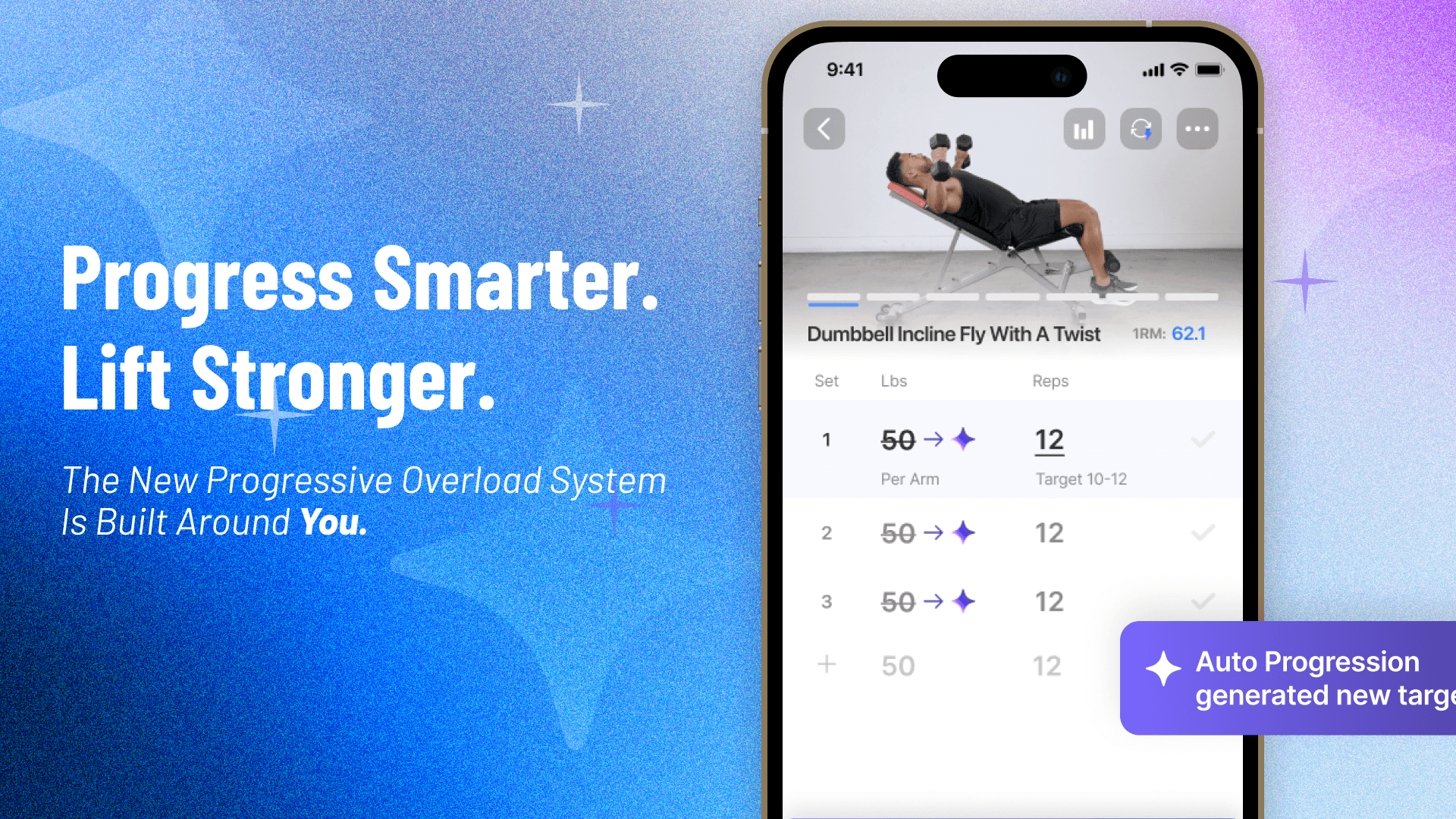
The New Era of Jefit: The Progressive Overload System
Smarter. Adaptive. Designed Around You. For over a decade, Jefit has helped millions of lifters track their workouts. Now, we’re taking the next leap forward — transforming Jefit from a workout tracker into a deeply personalized training intelligence.
Read More →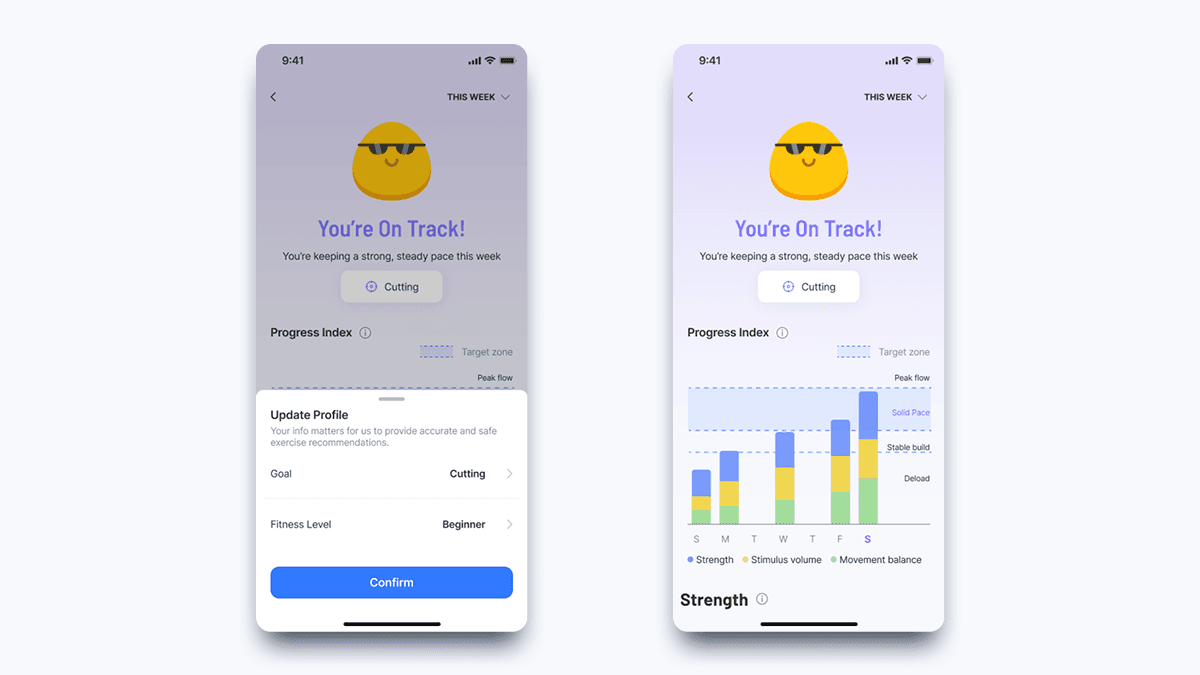
The North Star Progress Index (NSPI)
How Jefit’s NSPI Measures Your Weekly Training Adaptation. The North Star Progress Index (NSPI) is the intelligence layer inside Jefit’s new Progressive Overload (PO) System— the part that helps you see how your body is adapting and performing over time.
Read More →