
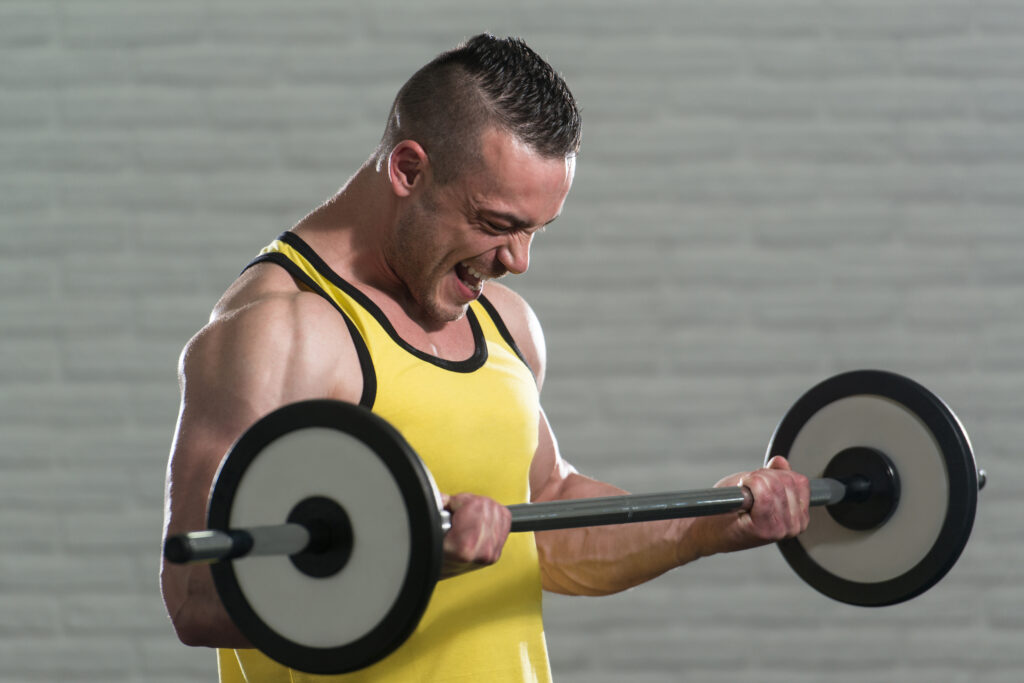
If you want better results in the gym, your training must match your goals. It’s that simple. One of the most overlooked principles in fitness is training specificity. Many lifters train hard but fail to train with purpose, leading to slow progress, frustration, and plateaus. Understanding and applying specificity can dramatically improve strength, muscle growth, and long-term performance. Whether your goal is building muscle, increasing strength, improving endurance, or enhancing athletic ability, how you train matters just as much as how often you train.
What is Training Specificity?
Training specificity refers to the principle that your body adapts specifically to the type of stress placed on it. This concept is often called the SAID Principle, which stands for Specific Adaptations to Imposed Demands. In simple terms, your body becomes better at exactly what you practice. If you train heavy squats, you get stronger at squatting. If you perform high-rep circuits, your endurance improves. If you focus on explosive movements, your power increases. Your body does not improve equally in all areas. It adapts in the areas you emphasize most.
Specificity applies to several key training variables, including exercise selection, load, repetition ranges, movement speed, rest periods, and training frequency. All of these factors influence how your body responds to training. When these variables align with your goals, progress accelerates. When they do not, results slow down.
Why Specificity Matters for Strength Training
Strength training success depends on targeted adaptation. If your goal is to get stronger but you mainly perform light weights and high repetitions, your body will adapt for muscular endurance rather than maximal strength. If you want to build muscle but spend most of your time doing cardio-style workouts, hypertrophy gains will be limited.
Specificity ensures that your training time produces the greatest return. Instead of hoping your workouts lead to improvement, you are deliberately directing your body toward a specific outcome. This leads to faster progress, better motivation, and more consistent results.
It also helps reduce wasted effort. Many lifters work extremely hard but fail to see progress because their program lacks focus. Training specificity creates clarity, structure, and purpose in every session.
Specificity and Strength Development
If your primary goal is building strength, your training must reflect that objective. Strength gains are driven mainly by heavy loads, low to moderate repetitions, long rest periods, and compound movements. Exercises such as squats, deadlifts, bench presses, overhead presses, and rows should form the foundation of your program.
Typical strength-focused training includes loads between 80 and 95 percent of one-rep max, repetition ranges of one to five reps, and rest periods of two to five minutes. This type of training improves neural efficiency, muscle fiber recruitment, and technical proficiency with heavy weights.
Without specificity, strength gains are limited. Performing endless sets of twelve to fifteen repetitions may improve muscular endurance, but it will not maximize maximal force production. Strength requires practicing lifting heavy weights consistently.
Specificity and Muscle Growth
Muscle hypertrophy requires a different type of stress. While strength and muscle growth overlap, hypertrophy training emphasizes moderate loads, higher training volume, and controlled movement patterns. Repetition ranges between six and twelve, moderate rest periods, and higher total sets per muscle group are common in hypertrophy-focused programs.
Exercise selection also matters. Isolation movements, machines, and targeted accessory exercises play a larger role in muscle-building programs. Time under tension, metabolic stress, and mechanical tension are key drivers of hypertrophy.
If your goal is aesthetic development, your training must reflect these priorities. Heavy singles alone will not maximize muscle size, just as high-rep circuits alone will not maximize strength.
Specificity and Athletic Performance
For athletes, specificity becomes even more critical. Sports performance depends on movement patterns, speed, coordination, and energy systems. A sprinter needs explosive lower-body power. A basketball player needs agility and vertical jump ability. A combat athlete needs strength endurance and rotational power.
Training programs must mimic the demands of competition as closely as possible. This includes movement direction, tempo, force production, and fatigue patterns. General strength training builds a foundation, but sport-specific training converts that strength into usable performance. Without specificity, athletes may become fit but not functional for their sport.
How Specificity Prevents Plateaus
Plateaus often occur when training becomes unfocused. Many lifters combine random exercises, inconsistent rep schemes, and changing goals without structure. This confuses the body’s adaptation process.
Specificity creates progressive direction. When your training variables support a clear goal, you can measure progress accurately and make targeted adjustments. This leads to consistent overload and steady improvement. It also improves recovery. When training has a clear purpose, volume and intensity are easier to manage. This reduces burnout and overtraining while improving long-term adherence.

Applying Specificity to Your Training
To use specificity effectively, start by defining your primary goal. Are you training for strength, muscle growth, fat loss, endurance, or sport performance? Once your goal is clear, design your program around that objective.
Choose exercises that directly support your goal. Select rep ranges that match your desired adaptation. Adjust rest periods to support performance. Structure your weekly schedule to prioritize your main focus.
For example, a strength-focused lifter may train three to four days per week using heavy compound lifts and long rest periods. A hypertrophy-focused lifter may use higher volume, moderate loads, and greater exercise variety. A general fitness enthusiast may balance multiple qualities but still emphasize a primary outcome.
Tracking your workouts is also essential. Monitoring loads, reps, and volume ensures your training stays aligned with your training objectives.
How JEFIT Supports Training Specificity
JEFIT makes applying specificity simple by helping users organize, track, and customize their training programs. With thousands of exercises, built-in routines, and detailed performance tracking, lifters can design programs that match their exact goals.
Users can create strength-focused plans, hypertrophy splits, or sport-specific routines while monitoring progress over time. JEFIT’s logging features help ensure progressive overload, while analytics reveal whether training variables are aligned with desired outcomes. By using JEFIT consistently, lifters can transform general workouts into targeted training systems.
Balancing Specificity and Variety
While specificity is essential, some variety is still beneficial. Minor exercise changes, accessory work, and periodic program adjustments help reduce boredom and overuse injuries. However, variety should support your goal, not replace it.
Effective programs balance focused primary movements with supportive secondary exercises. This maintains motivation while preserving targeted adaptation. Too much randomness reduces effectiveness. Purposeful variation enhances it.
Conclusion
Training specificity is the foundation of effective strength training. Your body adapts precisely to what you ask of it. When your workouts match your goals, progress accelerates. When they do not, results stall.
By understanding and applying specificity, lifters can train smarter, recover better, and achieve lasting success. Whether your goal is strength, muscle, performance, or overall fitness, aligning your program with your purpose is the key to unlocking your full potential. With tools like JEFIT, turning intention into results has never been easier.
Jefit: The Strength Training App Powering Your Progress in 2026
If you’re serious about building muscle, increasing strength, and tracking every set with precision in 2026, the Jefit strength training app is built to support your progress. With over 20 million downloads and more than 12 million active users worldwide, Jefit is consistently ranked among the top strength training apps for structured workouts and performance tracking. Recognized as a Best Fitness App of 2026 and featured in Forbes, Men’s Health, PC Magazine, and USA TODAY, Jefit combines expert-designed training programs, detailed workout analytics, and a global fitness community to keep users motivated and accountable. Whether your goal is muscle growth, strength progression, or smarter training intensity management, Jefit provides the tools needed to train efficiently and achieve long-term results.

- Best Fitness Apps for Tracking Volume, Sets, and Recovery in 2026 - June 5, 2026
- Why Glute Strength Matters as You Age - April 1, 2026
- Free Weights vs. Machines: What Does Science Really Say? - March 25, 2026