
Exercise Database
Find the perfect workouts from the JEFIT exercise database by muscle group, equipment, or try something new.
Select by Muscle
Select by Equipment
Jefit Exercises
1294 EXERCISES FOUND
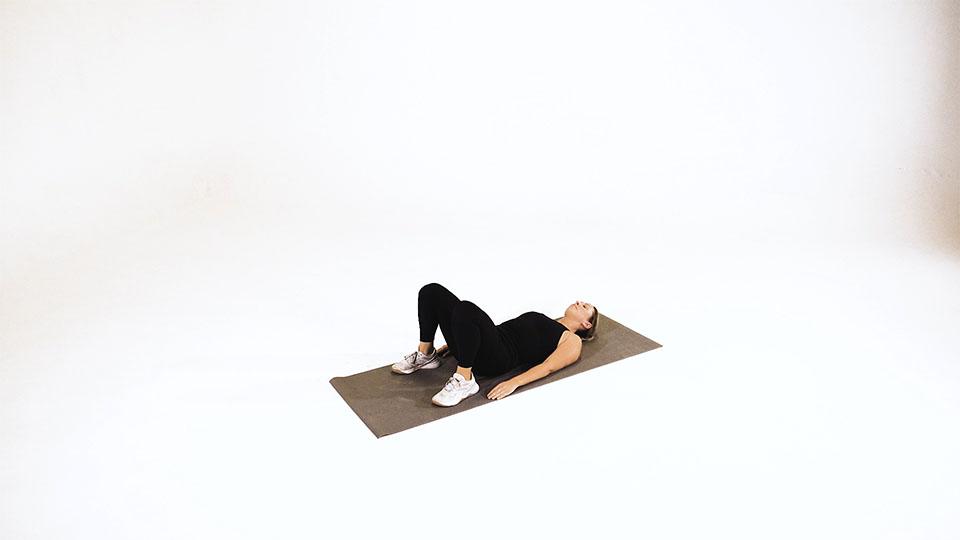
Upward Facing Bow Pose
Steps : 1.) Start off by laying on your back with your knees bent up, placing your palms facing out near your shoulders. 2.) Putting the weight of your body on your heels, peel your back off of the floor and lift up through the hips. 3.) As your hips are raised up off of the ground, put the pressure on the palms of your hands and straighten the arms to lift into the full position. 4.) Once at this position press your inner thighs closer together and push your groin up towards the ceiling. 5.) Hold this position for a few seconds and return back to the starting position.
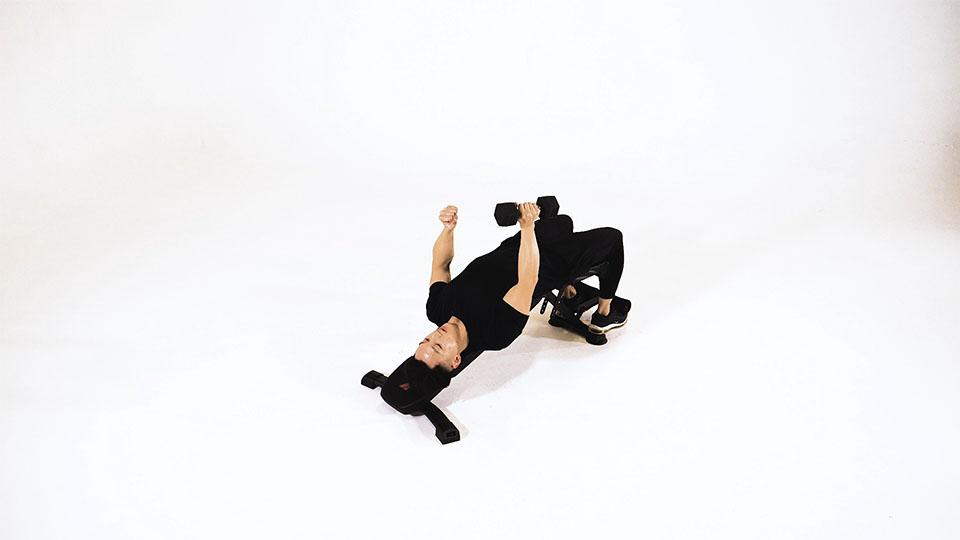
Dumbbell Decline One-Arm Hammer Press
Steps : 1.) Start by laying on a decline bench with your feet flat on the floor or secured under foot holders, one arm holding a dumbbell in a hammer grip position and arm extended above your chest. 2.) Slowly lower your arm to shoulder level, maintaining a 90-degree angle in your arm until you feel a tension in your chest. 3.) Hold this position for a count then return back to the starting position. 4.) Repeat for as many reps and sets as desired.
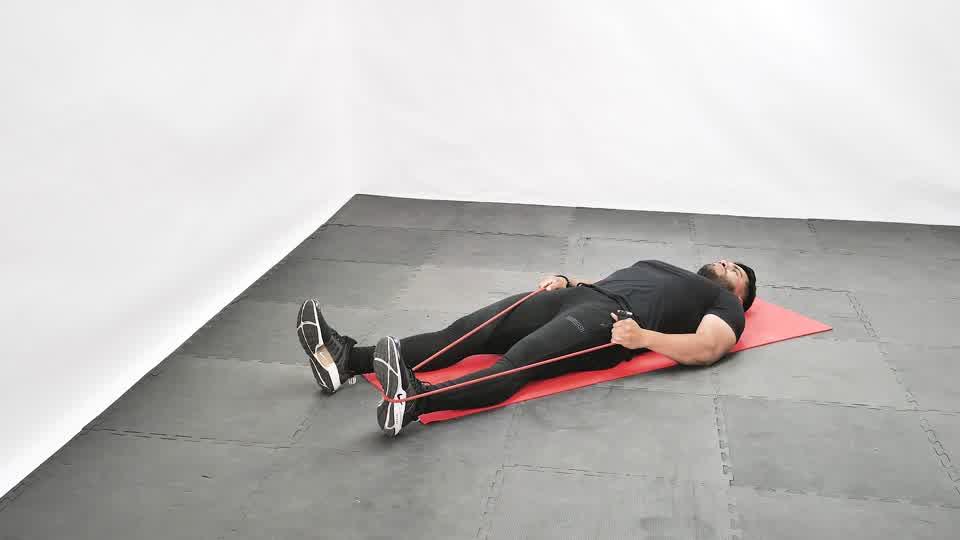
Reclining Big Toe Pose
Steps : 1.) Start by laying on your back with your knees bent up towards the ceiling. 2.) Take your right leg, extend it up and grab it. 3.) Allow the straight leg that is being held to go out to the side of your body, keeping it straight in the process and you move it down towards the floor. 4.) Turn your head slightly in the opposite direction and keep your opposite hand pushed upon the left leg. 5.) Hold this position for 5 to 10 breaths and then switch legs.
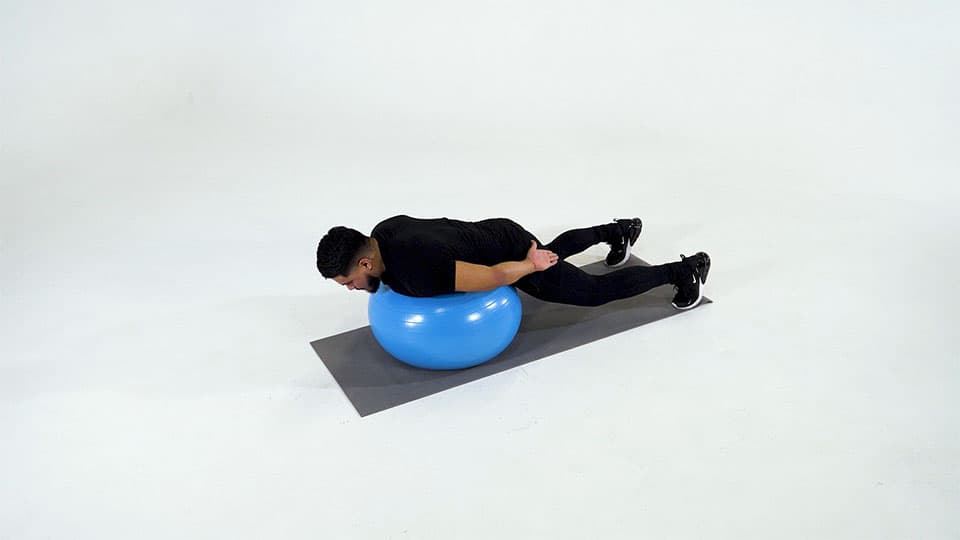
Stability Ball Back Extension with Knees Off Ground
Steps : 1.) Begin by lying prone with your chest on top of an exercise ball in a plank position with your arms extended back behind your body. 2.) Extend your back towards the ceiling and hold position for a few seconds then return to the start position. 3.) Repeat for as many reps and sets as possible.
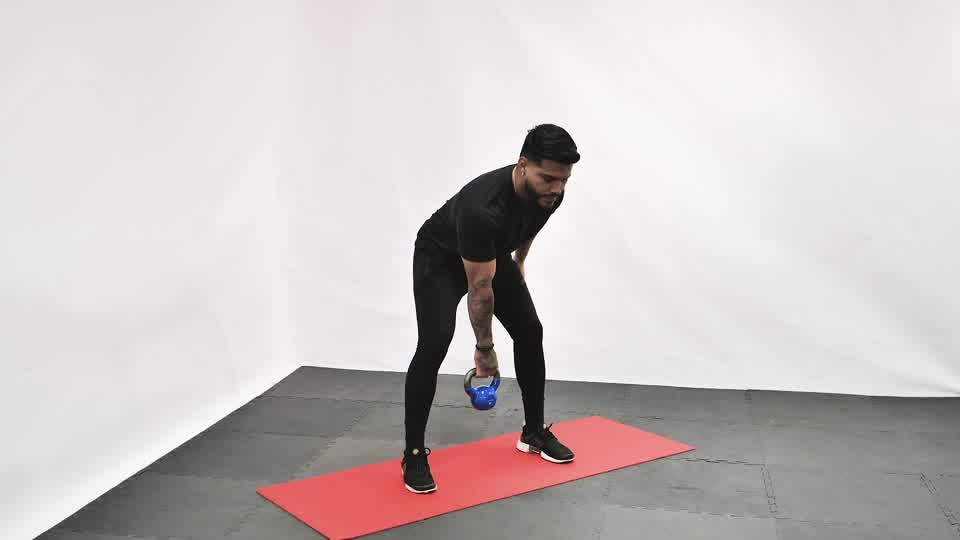
Kettlebell One-Arm Palm Clean
Steps : 1.) To begin this exercise; start off by placing one kettlebell between your feet and bend down at your knees pushing your glutes out. 2.) Take the kettlebell by the handle and raise it quickly so that it flips and the ball lands in the palm of your hand. 3.) Then throw the kettlebell back out and catch it with the handle in front of you and return it back to the floor. 4.) Return back to the starting position. 5.) Repeat this exercise for as many repetitions as needed
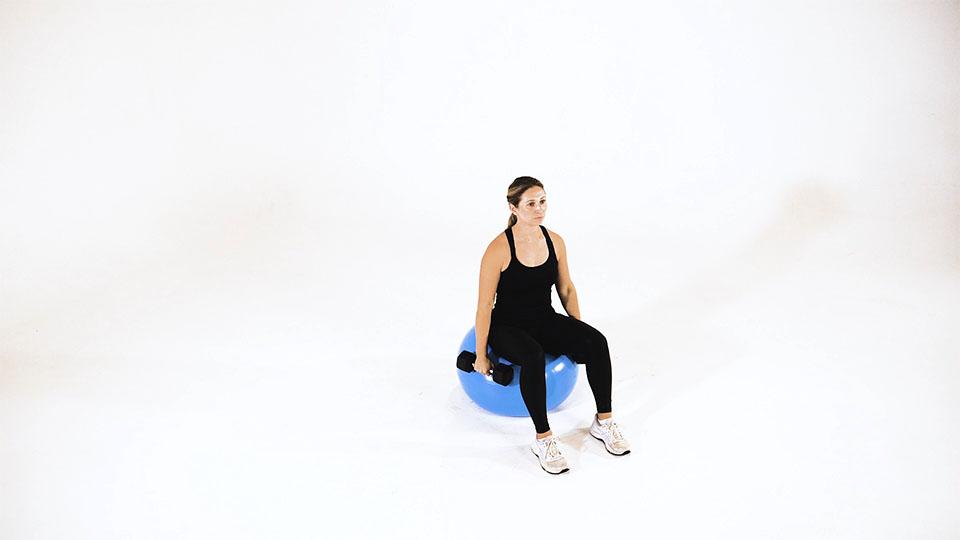
Dumbbell Alternating Lateral Raise (Stability Ball)
Steps : 1.) Start off by sitting straight up on a stability ball with both feet together and each hand holding a dumbbell. 2.) Elevate one of the dumbbells to shoulder height, keeping the dumbbell straight during the entire motion then slowly return back to the starting position. 3.) Then alternate with the opposite arm with the dumbbell to shoulder level. 4.) Repeat for as many reps and sets as desired.

Kettlebell Jerk
Steps : 1.) To begin this exercise; start off by taking a kettlebell in both hands and clean pressing them to your shoulder. 2.) Perform a squat and dip your body at the knees keeping your chest and back straight. 3.) As you perform this movement, use your momentum to thrust the kettlebells overhead. 4.) Hold onto this position for a few seconds then return back to the starting point with the kettlebells clean pressed at the shoulder. 5.) Repeat this exercise for as many repetitions as needed.
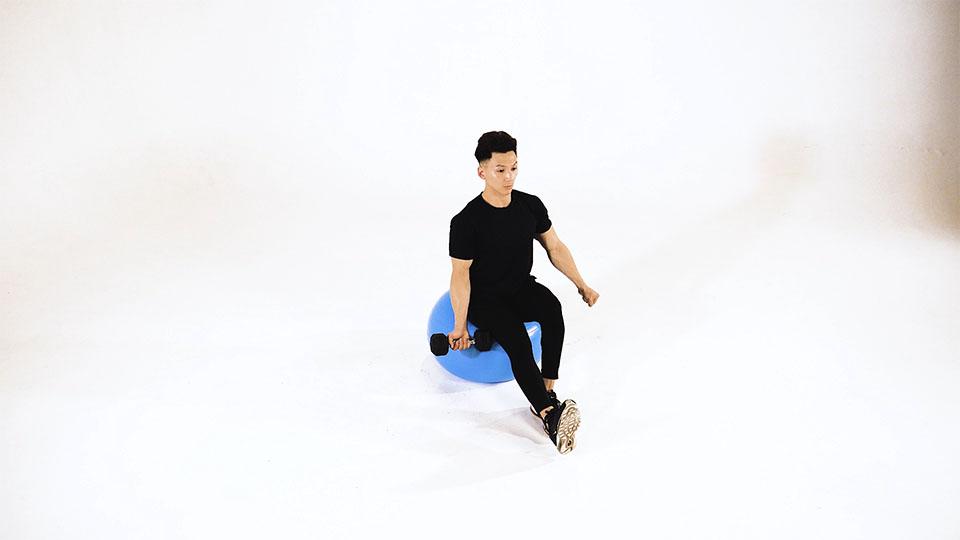
Dumbbell One-Arm Single-Leg Bicep Curl on Stability Ball
Steps : 1.) Start by sitting on an exercise ball, holding onto a dumbbell in one hand and elevating a leg on the same side. 2.) Lift up the weight, while keeping the leg raise, and curl it up to chest level, making sure to isolate the bicep and then return back to the starting position. 3.) Repeat for as many repetitions as desired and then switch arms.
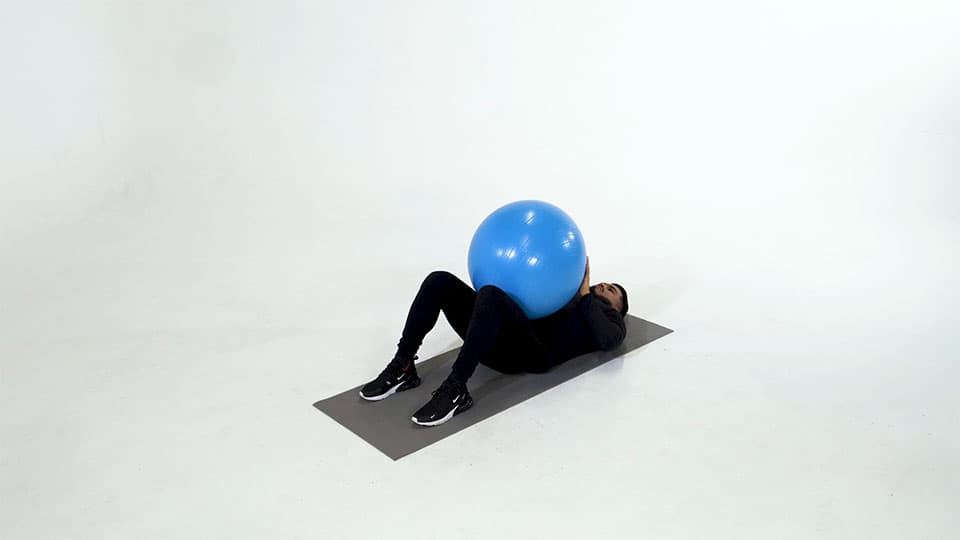
Stability Ball Ab Curl
Steps : 1.) Lay down on a mat with your feet firmly planted on the ground and knees slightly bent. 2.) Place an exercise ball right above your abdominals with your hands on the ball, then slowly roll the ball up your thighs pausing at the top near your knees, holding this position for a few seconds. 3.) Return the ball back down to the starting position slowly and repeat for as many reps and sets desired.
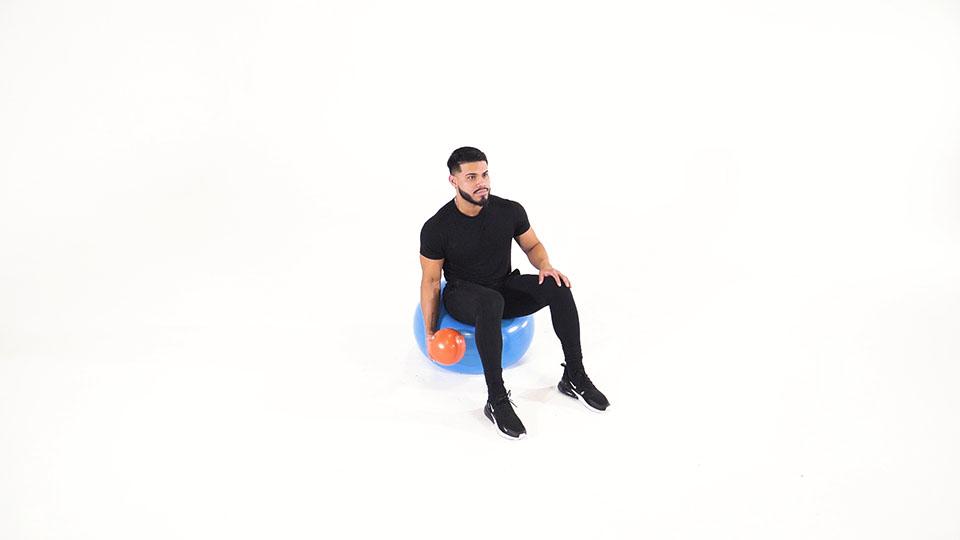
Medicine Ball Bicep Curl on Stability Ball
The medicine ball biceps curl on an exercise ball requires balance and coordination while also isolating and targeting the bicep muscle Steps : 1.) Start by sitting on an exercise ball with your feet firmly on the floor in front of you. 2.) Hold a Medicine Ball in one hand and curl it up bringing your forearm up to your bicep, isolating the muscle as much as possible. 3.) Return to starting position and switch arms. 4.) Repeat for as many reps and sets as desired.
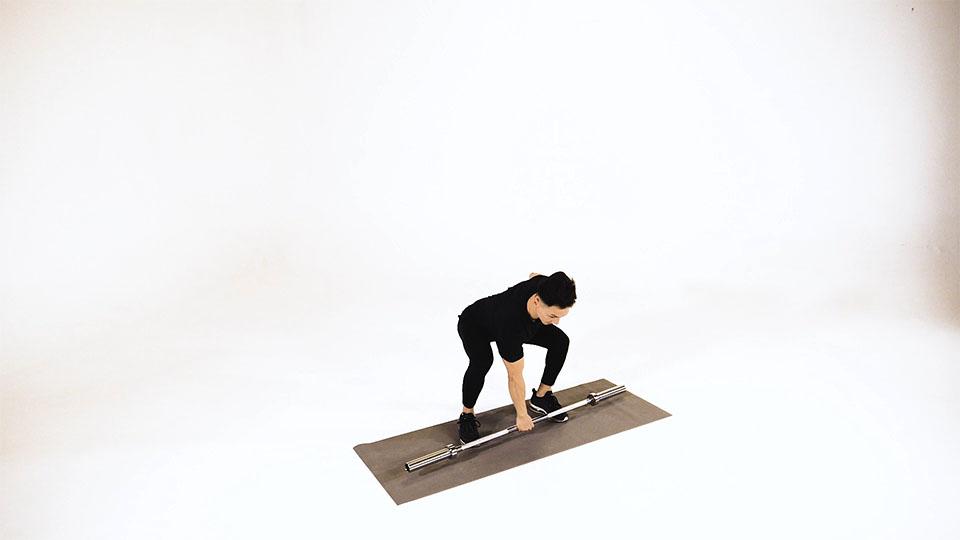
Barbell One-Arm Snatch
The one-arm snatch exercise is an advanced workout that targets most of the muscles of the body and helps improve overall strength. Steps : 1.) Start off standing with your feet shoulder width apart, and a slight bend in your knees. 2.) Grasp the bar with an overhead grip. 3.) Starting with the barbell held slightly above the knees, lift the weight up over your head, then back to shoulder height and finally back to starting position between near your knees.
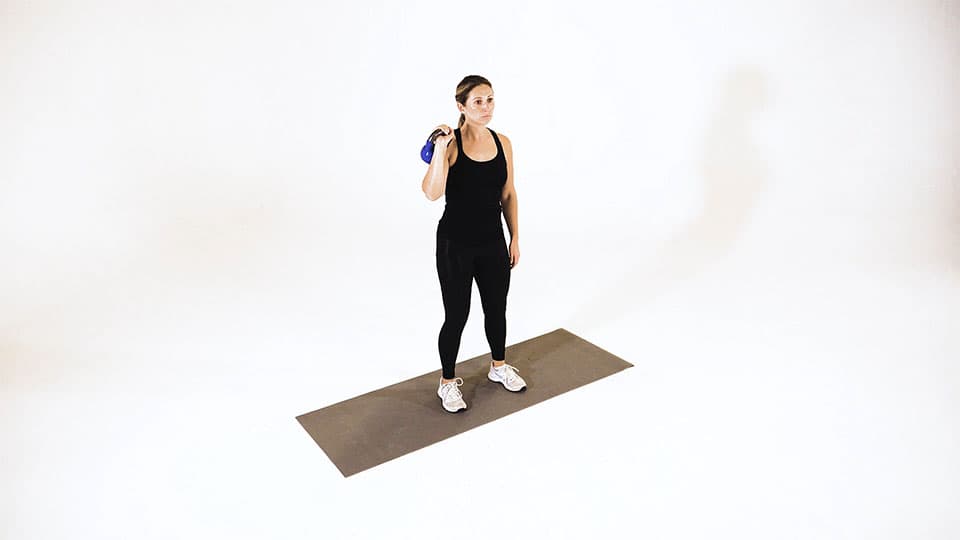
Kettlebell One-Arm Jerk
Steps : 1.) To begin this exercise; start off by taking a kettlebell in one hand and clean pressing it to your shoulder. 2.) Perform a squat and dip your body at the knees keeping your chest and back straight. 3.) As you perform this movement, use your momentum to thrust the kettlebell overhead. 4.) Hold onto this position for a few seconds then return back to the starting point with the kettlebell clean pressed at the shoulder. 5.) Repeat this exercise for as many repetitions as needed.
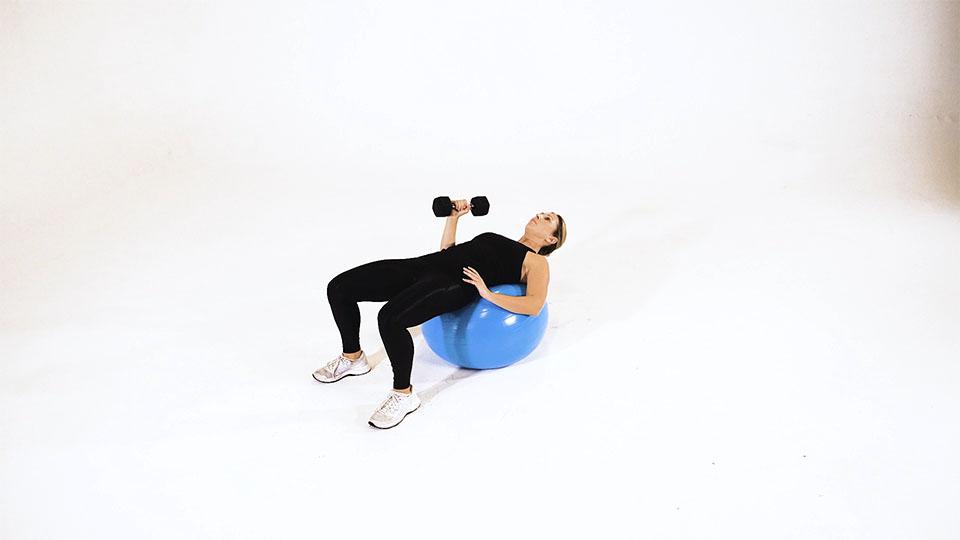
Dumbbell One-Arm Hammer Press (Stability Ball)
Steps : 1.) Start off by laying down on a stability ball with your feet flat on the floor and holding a dumbbell in one hand in a hammer grip position with arm extended straight over your chest. 2.) Then slowly lower your arm until it is at about shoulder level, keeping a 90-degree angle in your arm until you feel tension in your chest. 3.) Hold this position for a count then return back to the starting position. 4.) Repeat for as many reps and sets as desired.
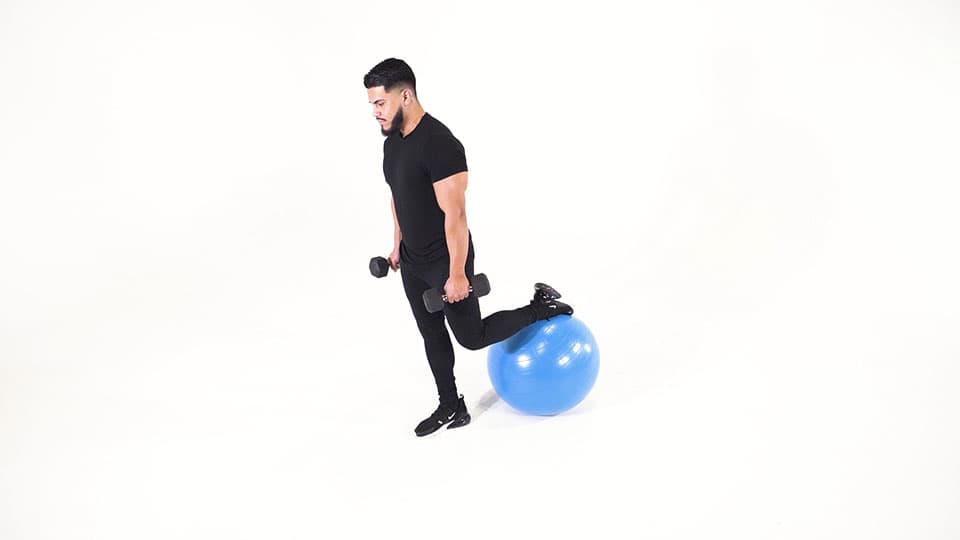
Dumbbell Bicep Curl on Stability Ball
The bicep curl on a stability ball with leg raised exercise is an advanced exercise that incorporates balance along with a bicep curl. Steps : 1.) Start by holding a dumbbell in each hand with a palms up grip. 2.) Place the top of one foot behind you on an exercise ball as if you were stretching your leg. 3.) While keeping your back straight and your abs drawn in, bring your arms down in front of your legs. 4.) Raise your arms up, curling and contracting your biceps, squeezing the muscle as much as possible. 5.) Lower your arms and return to starting position and switch legs. 6.) Repeat for as many reps and sets as desired.
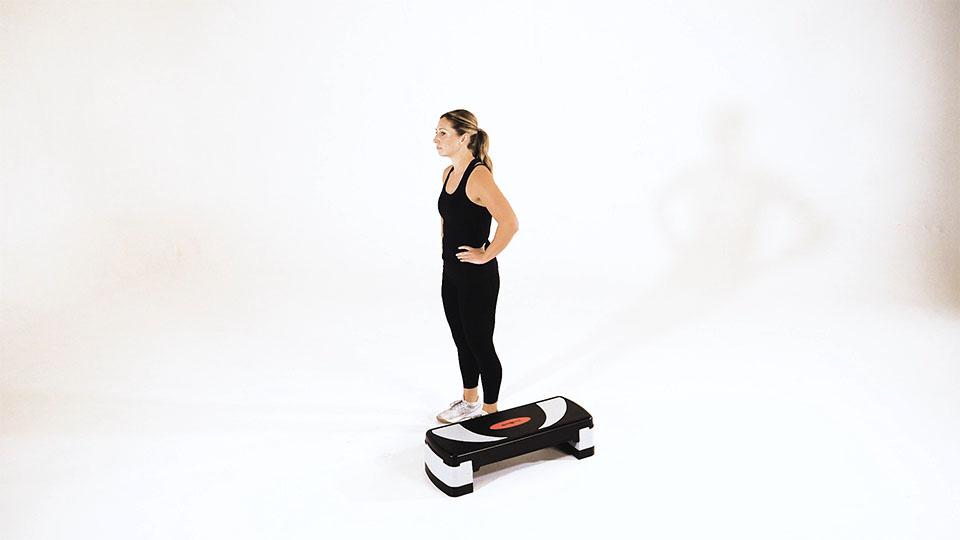
Rotational Step-Up
Steps : 1.) Start by standing next to a box or bench slightly rotated so that you aren't fully facing the box, keeping your feet shoulder width apart and straight ahead of your body. 2.) Place your hands on your hips, then rotate your body and step up with one foot onto the platform. 3.) Finish the rotation by taking the rest of your body and lifting up through the hip on the opposite side onto the platform. 4.) Step down, still holding your hands on your hips, return to the starting position and repeat for as many times as you can.
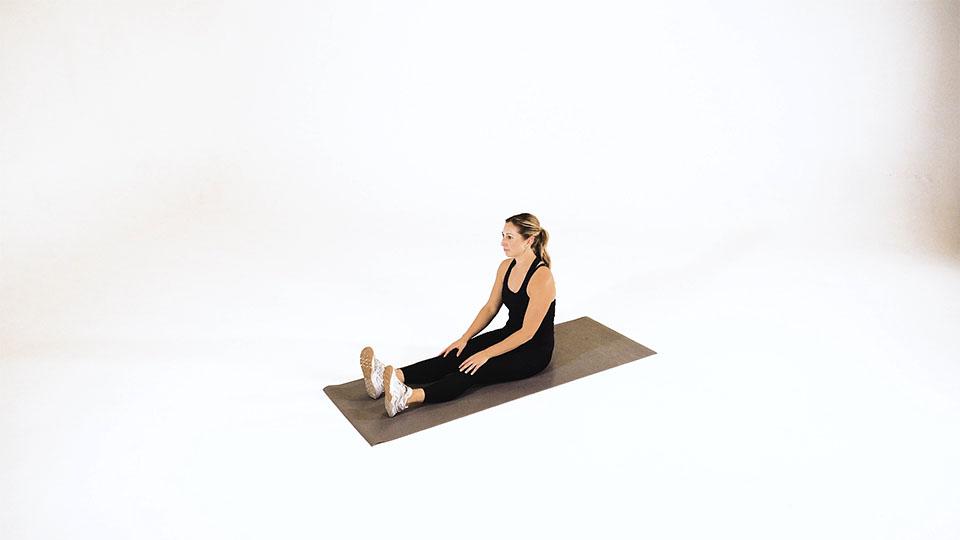
Sage Twist 1
Steps : 1.) Start by sitting on the floor and bringing your legs around to the left, tucking your right foot underneath your left ankle. 2.) Take your right hand and bring it behind you to the floor, keeping your knees facing forward and holding onto them with your right arm. 3.) Then if possible, take your left hand and slide it underneath your knee and catch hold of the left arm with your right hand, looking back over your shoulder 4.) Hold this position for 5 to 10 breaths and return to the starting position and repeat with the opposite side.
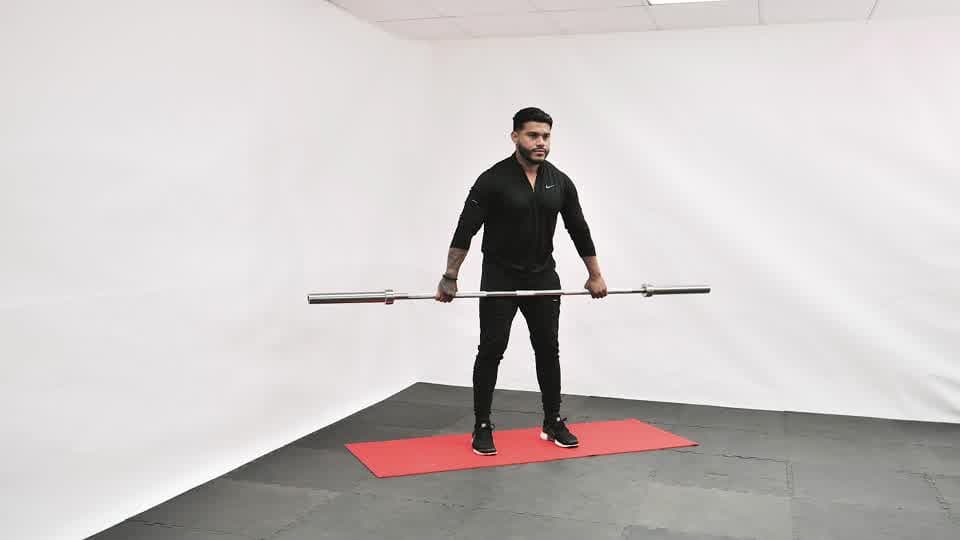
Barbell High Snatch
Steps : 1.) Start by standing in front of a barbell, feet shoulder width apart with an overhand grip position. 2.) Bring the barbell up to mid thigh position with a wide grip. 3.) Then pull up the barbell by driving up through your heels and raising the bar, quickly executing a second pull by extending through your hips and knees bringing the bar up as fast as possible. 4.) Continue to raise the bar up and overhead without re-bending your knees and hold for a count. 5.) Slowly return the bar back down to the starting position. 6.) Repeat for as many reps and sets desired.
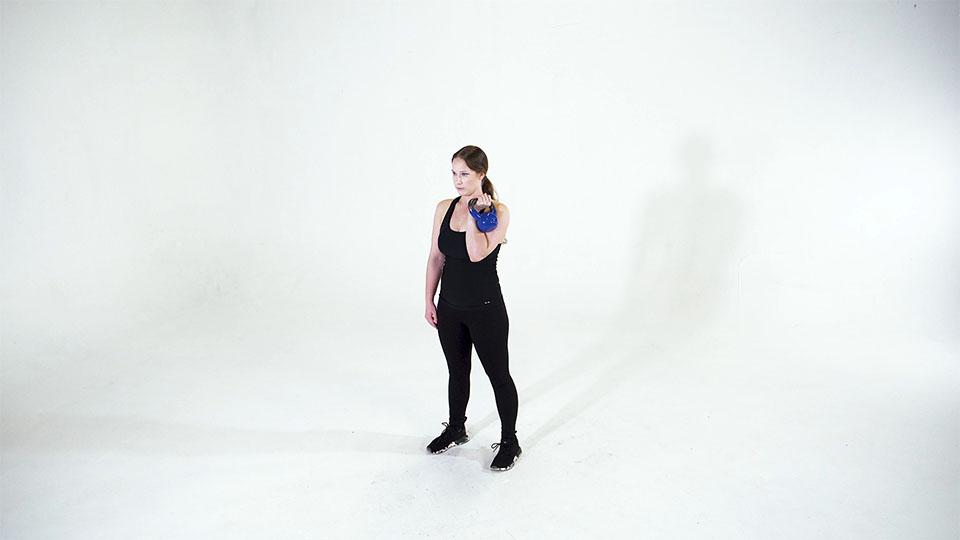
Kettlebell One-Arm Split Jerk
Steps : 1.) To begin this exercise; start off by taking a kettlebell in one hand and clean pressing it to your shoulder with palms facing out in front of you. 2.) Bend down at your knees and keep your chest and back straight. 3.) With your momentum, thrust the leg on the same side of the kettlebell back so that you are resting upon your heel and keep the front leg still bent with weight upon that leg. 4.) As you shift your legs, thrust the kettlebell in an overhead press. 5.) Hold onto this position for a few seconds and then return back to the starting point. 6.) Repeat this exercise for as many repetitions as needed.
Workout Tips & Advice to
Elevate Your Fitness Journey
Before you hit the gym, take the time to define your fitness goals. Whether you're aiming to build muscle, lose weight, or improve endurance, having specific objectives will guide your training and keep you focused on your workouts.
Designing a structured workout plan is essential for maximizing your time in the gym. Incorporate a mix of cardiovascular workouts, strength training, and flexibility exercises to target different muscle groups and improve overall fitness levels.
Compound exercises, such as squats, deadlifts, and bench presses, engage multiple muscle groups simultaneously, making them highly effective for building strength and muscle mass. Prioritize compound movements in your workouts for optimal results.
To continue making progress, gradually increase the intensity, volume, or resistance of your workouts over time. Progressive overload challenges your muscles and forces them to adapt, leading to growth and strength gains with every workout.
Pay attention to how your body feels during and after workouts. Push yourself to work hard, but also know when to scale back or take a rest day if you're feeling fatigued or experiencing pain from your workouts.
Recovery is just as important as exercise itself. Make sure to get an adequate amount of sleep, fuel your body with nutritious foods, and incorporate rest days into your routine to allow your muscles time to recover and grow stronger after each workout session.
Proper hydration is crucial for maintaining energy levels, regulating body temperature, and supporting overall health. Aim to drink plenty of water throughout the day, especially before, during, and after workouts to optimize your workout performance.
Keep your workouts interesting and challenging by incorporating a variety of exercises, equipment, and training modalities. Experiment with different workout styles, such as high-intensity interval training (HIIT), circuit training, and yoga, to keep your body engaged and avoid workout monotony.
Consistency is key to seeing results. Make exercise a regular part of your routine by scheduling workouts at the same time each day and treating them like appointments you can't miss. Consistency in your workouts will help you achieve your fitness goals faster.
Keep a workout journal or use a fitness app like JEFIT to track your workouts, monitor your progress, and celebrate your achievements. Tracking your workouts helps you stay accountable and motivated, and allows you to see how far you've come on your fitness journey.
Always start your workouts with a thorough warm-up to prepare your body for exercise and reduce the risk of injury. Incorporate dynamic stretches, mobility drills, and light cardio to increase blood flow and loosen up tight muscles before starting your workouts.
Technique is crucial for preventing injuries and maximizing the effectiveness of your workouts. Always prioritize proper form over lifting heavier weights or performing more repetitions. If you're unsure about your form, consider working with a certified personal trainer to ensure you're performing exercises correctly.
In addition to intense workouts, incorporate restorative activities like yoga, stretching, or foam rolling into your routine to improve flexibility, mobility, and recovery. These activities can help reduce muscle soreness and prevent injuries, allowing you to perform better in your next workout session.
Find ways to stay motivated and inspired on your fitness journey. Set rewards for reaching milestones, enlist the support of a workout buddy or join a fitness community, and remind yourself of why you started in the first place. Staying motivated will help you stay consistent with your workouts and achieve your fitness goals.
Rome wasn't built in a day, and neither is a strong, healthy body. Be patient with yourself and trust the process. Results take time, so stay consistent, stay positive, and keep pushing forward with your workouts, knowing that your hard work will pay off in the end.
Picture yourself achieving your fitness goals and visualize the steps you need to take to get there. Visualization can help increase motivation, focus, and confidence, making it easier to stay on track and overcome obstacles in your workouts and fitness journey.
Jefit Exercise Database
Explore our extensive collection of workout plans and routines tailored to your fitness goals. Find the perfect routine to elevate your workout experience.
555k
Routines
20M
Downloads
216k
Contributors